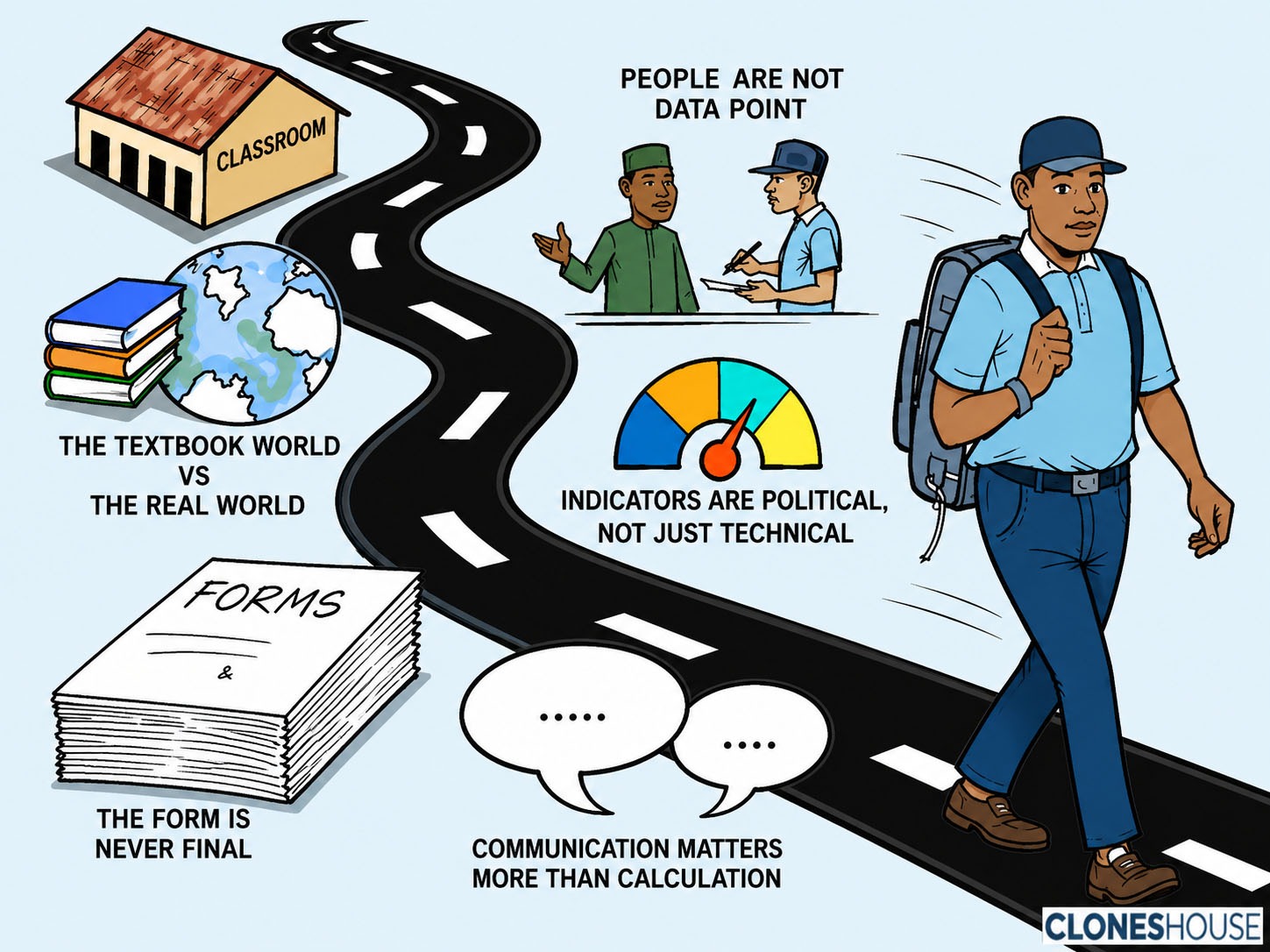
Climate Change in Nigeria: Artificial Intelligence Can Predict Floods, but Institutions Save Lives
“I thought I would die with my children.” These were the words of a young mother who survived the September 2024 Maiduguri flood after the collapse of the Alau Dam. As floodwater entered her home before dawn, she struggled to protect her six children until neighbours rescued them (Olaoluwa, 2024). Her experience reflects the suffering of hundreds of thousands of people and highlights an important lesson: inaction does not save lives. Timely institutional action does.
The Maiduguri flood exposed more than the impact of extreme rainfall. It revealed weaknesses in Nigeria’s approach to emergency preparedness; it revealed weaknesses in dam maintenance, urban planning, drainage systems, and emergency response. Climate change is increasing the frequency and intensity of floods across Nigeria, but when institutions fail to act on available warnings, predictable hazards become disasters.
By September 15, 2024, the flood had affected more than 414,000 people, with 37 deaths and 58 injuries reported. Homes, health facilities, roads, markets, and other public infrastructure were damaged across Maiduguri and neighbouring Jere Local Government Area (OCHA, 2024). Earlier assessments identified more than 157,000 displaced people in Borno State (IOM, 2024). These figures demonstrate that the greatest challenge is no longer predicting floods but responding to them before they occur.
Artificial intelligence (AI) can strengthen flood preparedness by analysing weather forecasts, river levels, satellite images, and other environmental information to identify areas at greatest risk. Unlike conventional forecasting methods, AI can quickly process large amounts of historical and real-time data, helping authorities issue earlier and more accurate warnings. However, a forecast has little value if institutions fail to act on it.
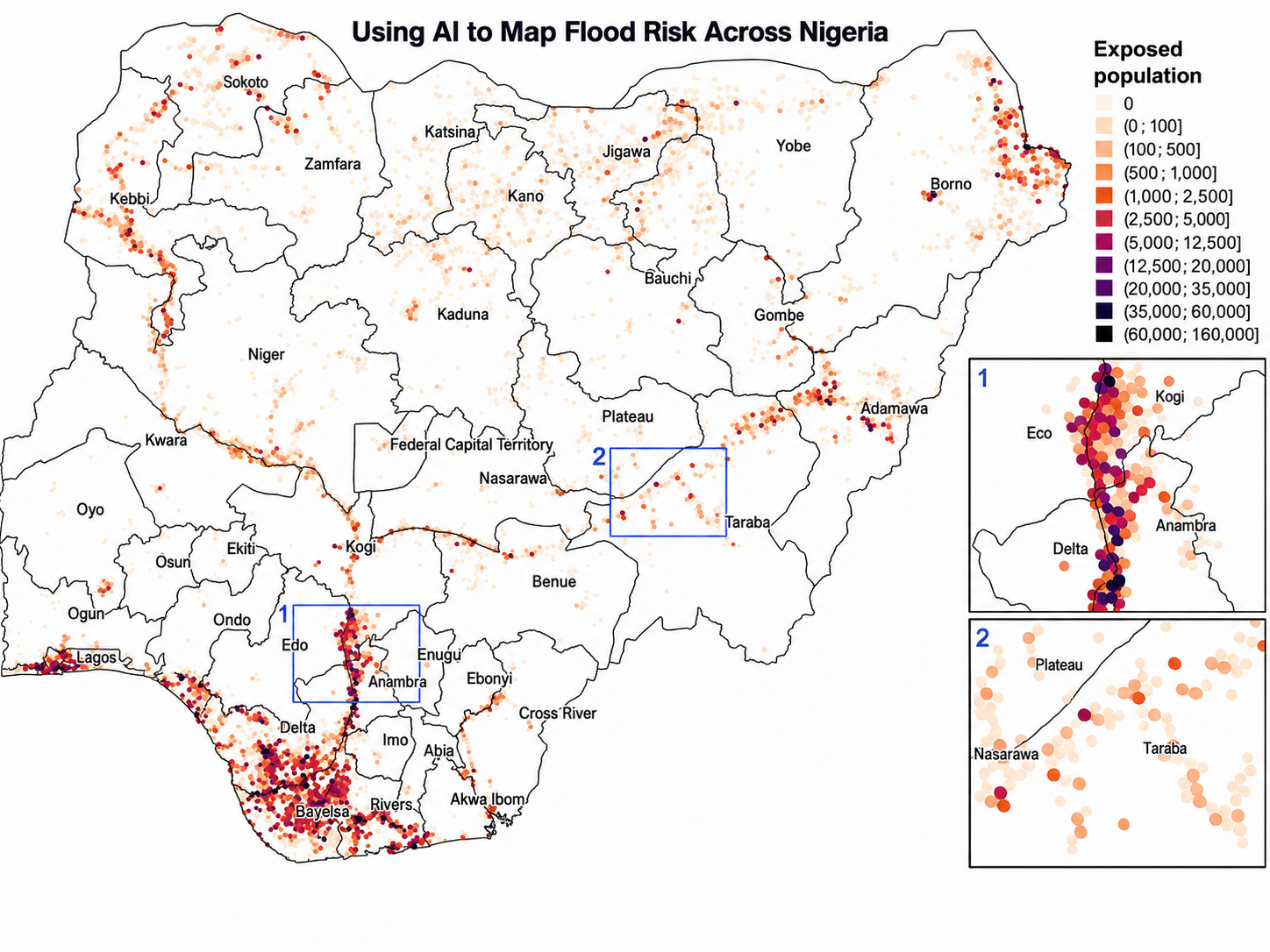 Source: Kafi et al., 2025
Experiences from both global and local contexts demonstrate the potential of AI when linked to decisive action. Google Flood Hub combines AI with weather and river data to forecast floods several days in advance, giving governments and communities more time to prepare (Nearing et al., 2024). In Bauchi State, researchers used AI to identify flood-prone communities with high accuracy when supported by reliable local data (Kafi et al., 2025). These examples demonstrate that AI improves decision-making, but it cannot prevent disasters on its own.
Forecasting to early action
The Nigerian Meteorological Agency (NiMet, 2026) and the Nigeria Hydrological Services Agency (NIHSA, 2026) already produce valuable flood information. The challenge is not generating warnings but ensuring they reach vulnerable communities and trigger rapid, coordinated action. Warnings in reports or online dashboards cannot protect lives.
The experience of GiveDirectly in Kogi State illustrates what is possible when forecasts lead to action. Using AI-supported flood forecasts, the organisation released emergency cash transfers before floodwaters arrived. Thousands of households used the support to relocate family members, protect essential belongings, and buy food and medicine (Barreras & Kenkuyu, 2025). The success of this intervention came not from AI alone but from acting on reliable evidence before the disaster struck.
Why good predictions still fail
Despite its potential, AI has certain limitations. It cannot repair dams, clear blocked drainage channels, enforce planning regulations, or prepare evacuation centres. It cannot ensure that emergency funds are released on time. These responsibilities belong to governments and public institutions. AI supports decisions and does not replace leadership, accountability, or governance.
AI also depends on reliable local information. Many informal settlements remain poorly represented in official records, making it difficult to identify vulnerable communities. Combining satellite data with local knowledge improves flood prediction and emergency planning. Residents often know which roads flood first, where drainage channels overflow, and which neighbourhoods require immediate assistance. Their knowledge should inform preparedness and response.
Effective flood warnings must also be clear, timely, and practical. People need to know what is happening, whether they are at risk, and what action they should take. Governments should share warnings through multiple channels, including SMS, radio, television, community leaders, religious organisations, and local government networks, so that everyone receives the information regardless of internet access.
Building a system that acts before a disaster
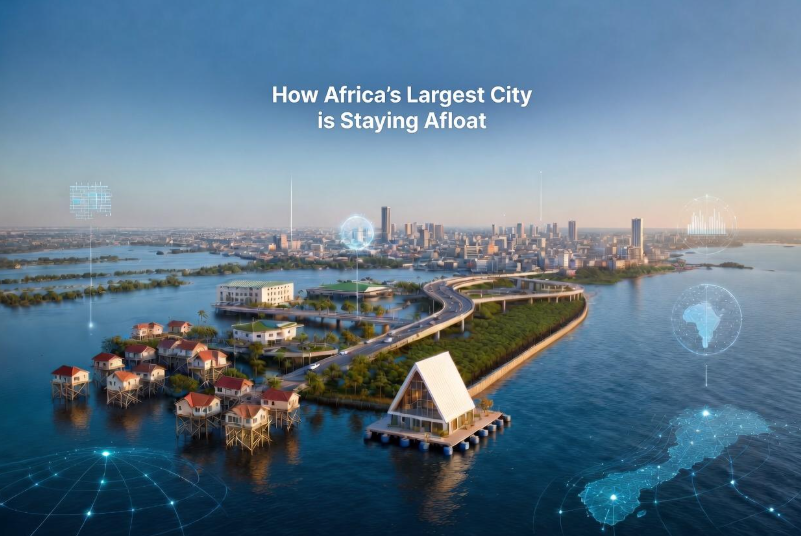
Source: Johnson, 2021
Governments and development partners should routinely monitor the following indicators to strengthen preparedness:
- Warning lead time: How early warnings are issued;
- Reach and understanding of warnings: How many people receive and understand them;
- Institutional response time: How quickly emergency plans are activated;
- Protective action: How many households have taken protective action;
- Effectiveness of forecast and response: Whether early warnings reduce deaths, displacement, and damage.
Tracking these indicators helps improve preparedness, accountability, and future responses.
Nigeria can build greater climate resilience by linking AI forecasts to clear emergency procedures to improve coordination across agencies, provide funding before disasters occur, and involve communities in preparedness and response. Technology companies and researchers can continue to improve forecasting systems, but public institutions remain responsible for protecting citizens.
Learning after every flood
Climate change will continue to increase flood risks across Nigeria. The Intergovernmental Panel on Climate Change projects that more than one billion people living in low-lying coastal cities and settlements could face increasing coastal climate hazards by 2050 (IPCC, 2022). AI can identify danger earlier and support better decisions, but technology is only one part of the solution. The real measure of success is not how accurately floods are predicted but whether governments, institutions, and communities act before the water arrives. AI can identify danger earlier, but only timely institutional decisions, accountable governance, and prepared communities can save lives.
References
Barreras, F., & Kenkuyu, S. (2025). How AI helped send cash just before floods hit in Nigeria. https://www.givedirectly.org/flood-forecast-ai
Glavovic, B. C., Dawson, R., Chow, W., Garschagen, M., Haasnoot, M., Singh, C., & Thomas, A. (2022). Cross-chapter paper 2: Cities and settlements by the sea. In H.-O. Pörtner, D. C. Roberts, M. Tignor, E. S. Poloczanska, K. Mintenbeck, A. Alegría, M. Craig, S. Langsdorf, S. Löschke, V. Möller, A. Okem, & B. Rama (Eds.), Climate change 2022: Impacts, adaptation and vulnerability (pp. 2163–2194). Cambridge University Press. https://doi.org/10.1017/9781009325844.019
International Organization for Migration. (2024). Nigeria: Flood situation report 1, Borno State. Displacement Tracking Matrix. Retrieved from https://dtm.iom.int/reports/nigeria-flood-situation-report-1-borno-state-13-september-2024
Johnson, A. (2021). How Africa’s largest city is staying afloat. BBC Future. Retrieved from https://www.bbc.com/future/article/20210120-how-africas-largest-city-is-staying-afloat
Kafi, K. M., Ponrahono, Z., Ash’aari, Z. H., & Barau, A. S. (2025). Flood risk prediction and modelling in Bauchi: Leveraging machine-learning models and explainable AI for urban resilience. The Journal of Climate Change and Health, 26, 100490. https://doi.org/10.1016/j.joclim.2025.100490
Nearing, G., Cohen, D., Dube, V., Gauch, M., Gilon, O., Harrigan, S., Hassidim, A., Klotz, D., Kratzert, F., Metzger, A., Nevo, S., Pappenberger, F., Prudhomme, C., Shalev, G., Shenzis, S., Tekalign, T. Y., Weitzner, D., & Matias, Y. (2024). Global prediction of extreme floods in ungauged watersheds. Nature, 627, 559–563. https://doi.org/10.1038/s41586-024-07145-1
Nigeria Hydrological Services Agency. (2026). 2026 annual flood outlook. Retrieved from https://nihsa.gov.ng/storage/publications/2026_AFO.pdf
Nigerian Meteorological Agency. (2026). 2026 seasonal climate prediction. Retrieved from https://nimet.gov.ng/publication_detail?id=71
Olaoluwa, A. (2024). “I thought I would die with my six children”: Dam collapse survivor. BBC News. Retrieved from https://www.bbc.com/news/articles/cy0r0jnp254o
United Nations Children’s Fund. (2024). Nigeria situation report: Maiduguri flood response, 10–23 September 2024. Available from https://www.unicef.org/media/162556/file/NigeriaSitRep%28MaiduguriFloodResponse%29September2024.pdf.pdf
United Nations Office for the Coordination of Humanitarian Affairs. (2024). Nigeria: Floods, Maiduguri Metropolitan Council and Jere floods flash update no. 2. Retrieved from https://www.unocha.org/publications/report/nigeria/nigeria-floods-maiduguri-mmc-and-jere-floods-flash-update-2-15-september-2024
About the Author
Dauda Ayuba is an Education Officer at the Kaduna State Ministry of Education, a Research Associate with Global Health Focus, and a 2026 Monitoring, Evaluation, and Learning Intern under the Cloneshouse Internship Programme at the Cloneshouse Foundation for African Development. He is a policy analyst who is committed to advancing public policy and sustainable development through rigorous research, social innovation, and data-driven analysis. His work focuses on generating evidence to inform policy and practice across the development sector. His professional interests include monitoring and evaluation, accountability, research, and learning, with a strong emphasis on strengthening systems to achieve impactful and sustainable outcomes.